Overview
MyzharBot v5 is the new version of my robotic project → link
MyzharBot is my long-running robotics project, a tracked platform I use to experiment with sensor fusion and autonomous navigation, and it has gone through several hardware generations over the years. Each new version reworks part of the chassis as I learn what works and what does not on the previous one, and the tracked drivetrain is one of the parts that has changed the most: it has to carry the weight of the batteries, compute board, and sensors, while still giving the robot enough traction and ground clearance to move reliably indoors and outdoors.
Here you can find all the pieces to print the mechanics of the two tracks. The track units are built around printed sprockets, idlers, and side plates that hold a length of rubber track taut around them, rather than relying on wheels, which gives MyzharBot better grip on uneven or slippery floors and lets it climb small obstacles that would stop a wheeled robot of the same size.
You can find the project online on OnShape for assembling all the parts. Having the full assembly modeled in CAD, rather than just loose STL files, makes it much easier to check clearances and fastener placement before committing to a print, especially for a part as mechanically involved as a track unit.
Rubber tracks: ROBOT TRACKS–A / Italian Store. The printed sprockets and idlers are sized to match these off-the-shelf rubber tracks, so you do not need to source or cut custom rubber belting to get the drivetrain running.
Assembling video:
The robot in action:
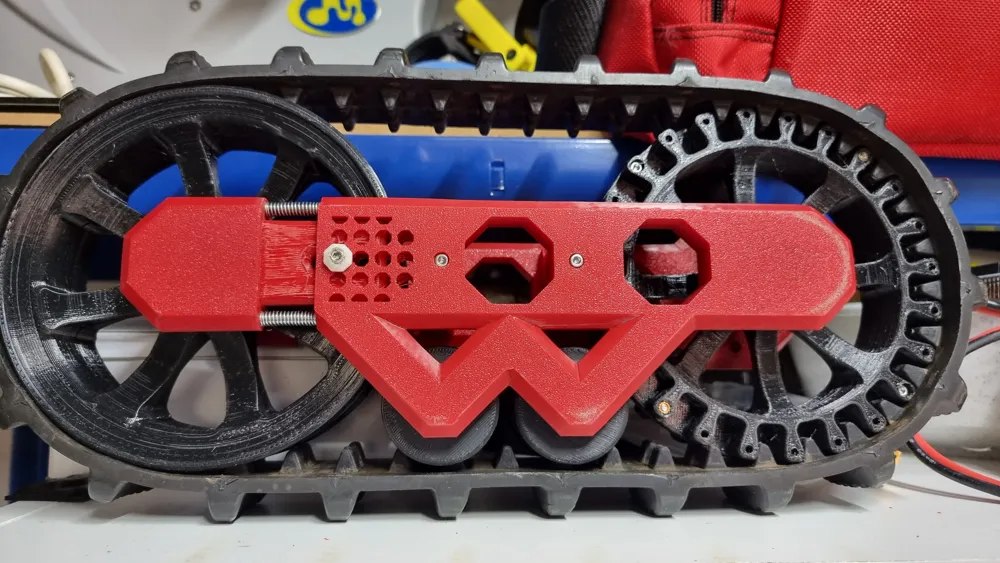
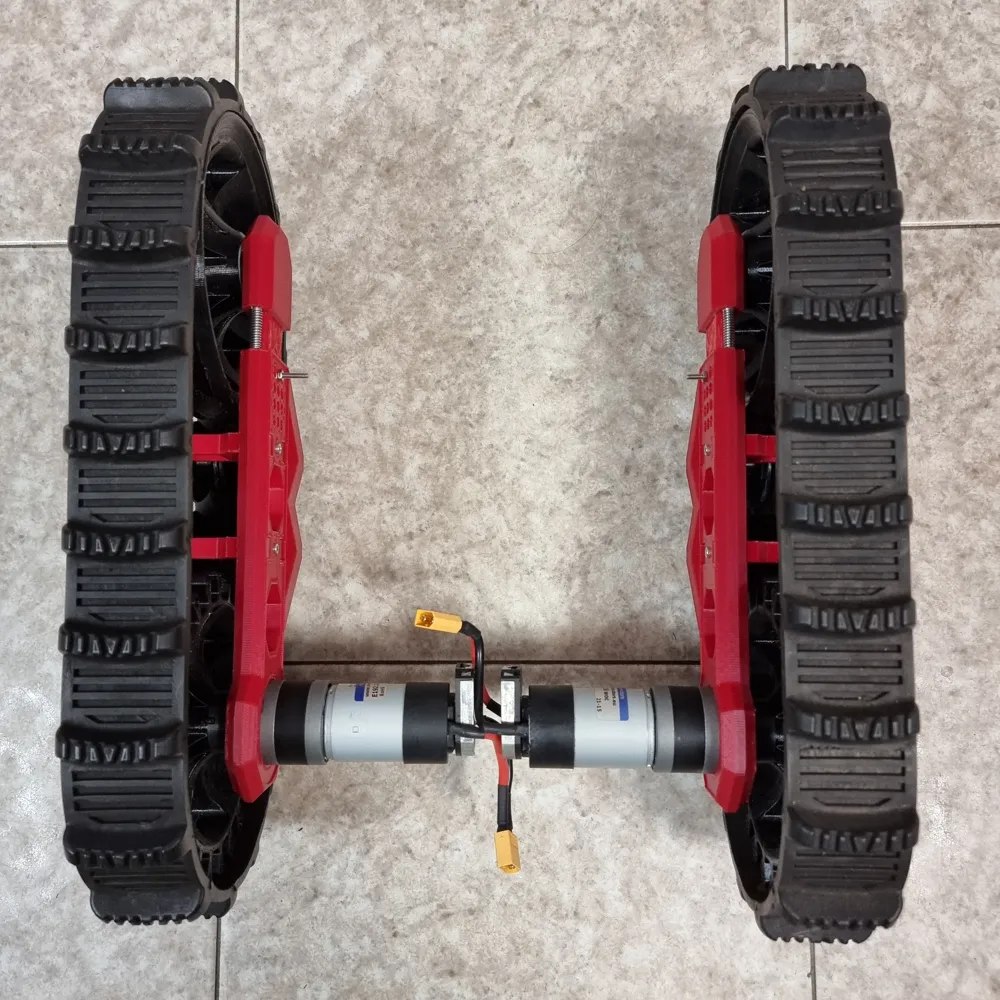
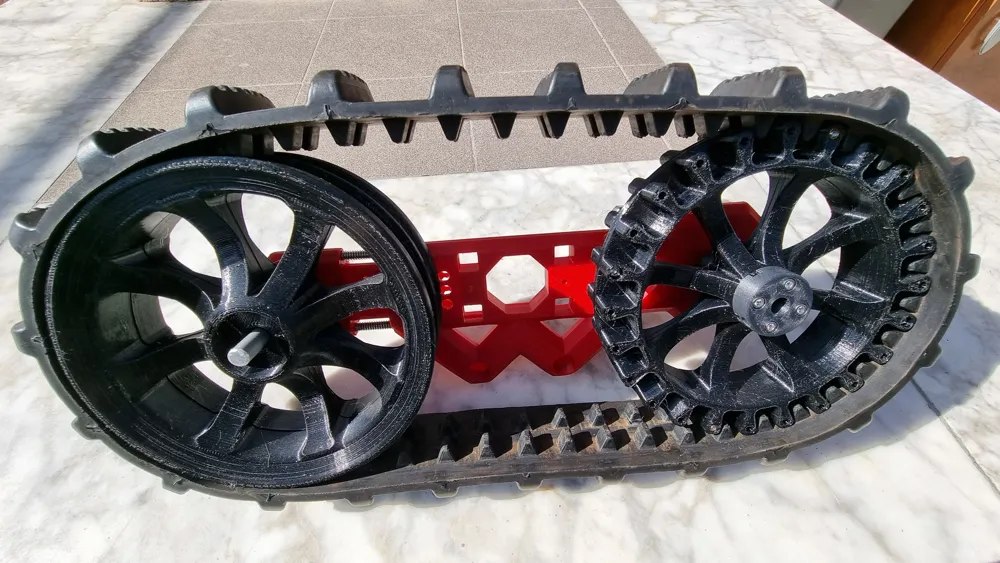
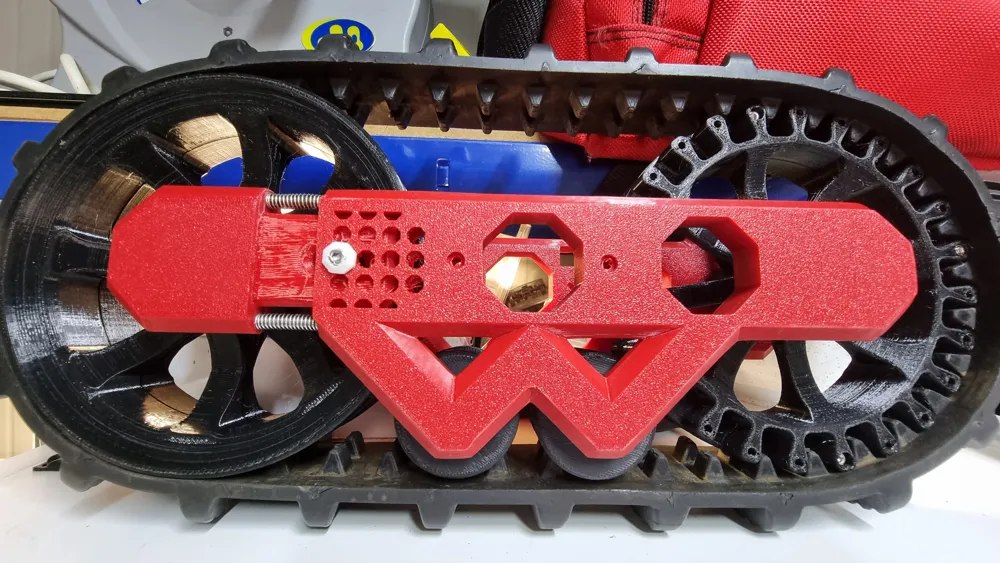
Publishing the printed parts separately from the full robot writeup means anyone who just wants to experiment with a tracked drivetrain, for their own robot, not necessarily a MyzharBot clone, can grab the mechanics here without having to adopt the rest of the platform’s electronics and software stack.
Every hardware generation of MyzharBot has taught me something I carried into the next one, and the current track units are the result of several rounds of that iteration: fewer parts to print, a more reliable fit around the rubber track, and mounting points that have proven themselves across real use rather than just looking good in CAD.
Robotics hardware is never really finished, just at the current best version of an ongoing process.
Print profiles
No public print profiles are currently available for this model on MakerWorld.
Download
The model is free to download and print, licensed under the Creative Commons Attribution-Noncommercial-Share Alike.